


 contact@goldcoastshowerscreens.com.au


What Factors Determine the Right Type of Shower Screen for Your Bathroom?
The best shower screen for your bathroom is determined by space, structure, and daily use. Good decisions come from assessing the room first, then choosing the screen.
- Door clearance: Ensure swing or slide paths don’t hit vanities or toilets.
- Wall and floor accuracy: Out-of-plumb walls impact which screens will fit.
- Daily use: Families or accessibility needs may require wider openings or sturdier hardware.
- Glass thickness: Thicker glass requires stronger fixings.
- Hardware finish: Match the tapware and consider corrosion resistance.
- Ventilation: Good airflow protects seals and reduces mould.
In smaller rooms, sliding doors are generally the most space‑efficient option. Fixed-panel walk‑in screens are rarely suitable because they typically require around 1200mm of panel width plus an additional 600mm of open access space—more than most compact bathrooms can spare.
How Do Different Shower Screen Types Influence Bathroom Functionality?
Functionality is determined by door movement, splash control, and how much space the system occupies.
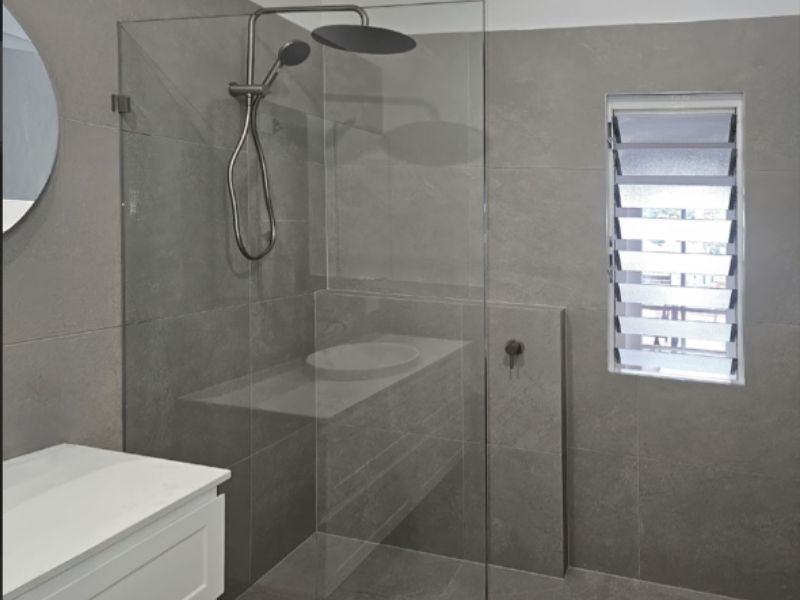
- Entry width: Pivot doors open wide; sliders save floor space.
- Splash control: Thresholds, return panels, and seals must match the screen type.
- Ergonomics: Handle height, reach, and grip affect usability.
- Tolerance: Framed and semi‑frameless systems tolerate imperfect walls better than frameless.
- Maintenance: Fewer tracks and edges reduce long‑term cleaning.
Why Does Professional Installation Matter for Frameless and Semi‑Frameless Shower Screens?
Frameless and semi‑frameless screens demand precise installation. Their minimal hardware provides little margin for error.
- Accurate site measurements for out‑of‑square walls.
- Fixings into structural backing, not hollow sections.
- Correct seal profiles matched to glass thickness.
- Proper silicone curing for watertight performance.
- Controlled tightening of hinges to protect glass edges.
Done correctly, frameless screens feel smooth and secure. Poor installation can lead to leaks, binding doors, or glass stress.
Which Shower Screen Types Are Easiest to Maintain Long‑Term?
Maintenance depends on the amount of framing, the door type, and how water behaves within the enclosure.
| Screen Type | Cleaning Effort | Typical Seals | Common Grime Points | Best Suited To |
| Frameless | Low | Polycarb / Magnetic | Glass surface only | Modern ensuites |
| Semi‑frameless | Medium | Mixed | Hinges, bottom edges | Family bathrooms |
| Framed | Medium‑High | Full perimeter | Tracks, corners | Budget installations |
| Fixed walk‑in | Low | Minimal | Entry splash zone | Larger rooms |
| Sliding | Medium | Track systems | Bottom rail debris | Narrow bathrooms |
Maintenance tips include daily squeegeeing, neutral cleaners, strong ventilation, early seal replacement, and gentle track cleaning.
How Do Custom Shower Screens Ensure a Perfect Fit for Unique Spaces?
Custom‑made screens are ideal for rooms with unusual layouts, angled ceilings, nib walls, or older homes where nothing is square.
- Precision templates record angles and notches accurately.
- Fixings positioned only where structural backing exists.
- Door swing and entry widths tailored to daily use.
- Channels aligned with grout lines for clean sightlines.
- Optional coatings to simplify cleaning.
What Installation Challenges Come with the Different Types of Shower Screens?
Each screen type presents different challenges. Addressing them early prevents leaks, damage, and rework.
- Out‑of‑plumb walls: Can twist hinges and create gaps.
- Insufficient fall: Allows water to pool at edges.
- Weak substrate: Causes fixings to loosen or rattle.
- Seal mismatch: Leads to leaks under pressure.
- Hardware strain: Over‑tightening stresses glass.
- Site access: Stairs, lifts, narrow hallways, or restricted entry points can affect installation time, safety, and manpower requirements.
Compliance with AS 1288 and AS/NZS 2208 is essential. Correct planning of penetrations, bracing, seal profiles, and hardware positions ensures a reliable, watertight installation.
Final Thoughts
A successful shower screen installation pairs the right screen with the correct fixing method, then confirms alignment, sealing, and compliance before the job is completed. When splash control, door movement, and long‑term maintenance are properly planned, your bathroom performs well for years.
For expert design selection, measurement, manufacturing, and installation, Brisbane Shower Screens can help bring your project together smoothly and reliably.
Brighten and Expand Your Living Space with Mirrored Wardrobes
 Apr. 10, 2024
Frameless Shower Screens vs Traditional Shower Enclosures: Which Is Best for Your Bathroom?
Apr. 10, 2024Choosing the Ideal Shower Screen: Framed vs Frameless Shower Screens
Apr. 10, 2024